
Learning Today. Innovating Tomorrow. Leading the Future.
A progressive, hands-on STEM and aerospace learning pathway that transforms curiosity into capability through robotics, coding, electronics, artificial intelligence and real-world innovation projects.
Four Plans. One Future.
A structured journey from foundational STEM exploration to advanced technology, robotics and aerospace innovation.
Launch
Foundation STEM Lab
CORE LEARNING DOMAINS
- Robotics Fundamentals
- Coding & Computational Thinking
- Electronics Basics
- Design Thinking & Maker Education
Orbit
Advanced Innovation Lab
CORE LEARNING DOMAINS
- Robotics Fundamentals
- Coding & Computational Thinking
- Electronics Basics
- Design Thinking & Maker Education
- Internet of Things (IoT)
Universe
Future Technology Lab
CORE LEARNING DOMAINS
- Advanced Robotics
- AI & Machine Learning
- 3D Design & Printing
- Internet of Things (IoT)
- Artificial Intelligence
- Innovation & Entrepreneurship
AERONOVA
Aerospace Innovation Centre
CORE LEARNING DOMAINS
- Aerospace Fundamentals
- Drone Technology
- Astronomy & Space Science
- Flight Mechanics
- Aerodynamics & Design
- Space Exploration
Indicative plan pricing as presented in the supplied curriculum framework. Confirm the applicable commercial terms before enrolment.
From Curiosity to Creation.
Learn by doing. Think creatively. Build solutions. Lead with purpose.
Explore
Discover concepts and develop curiosity through exploration.
Build
Apply knowledge to prototypes, experiments and projects.
Innovate
Develop original ideas and practical solutions to challenges.
Lead
Build confidence, collaboration and future-ready capabilities.
A Progressive Learning Journey
from Class 1 to 12.
A structured, hands-on STEM journey designed to nurture curiosity, build technical skills and inspire innovation at every stage.
Discover. Build. Lead.
Explore every stage
Select a stage to explore its curriculum, tools and example projects.
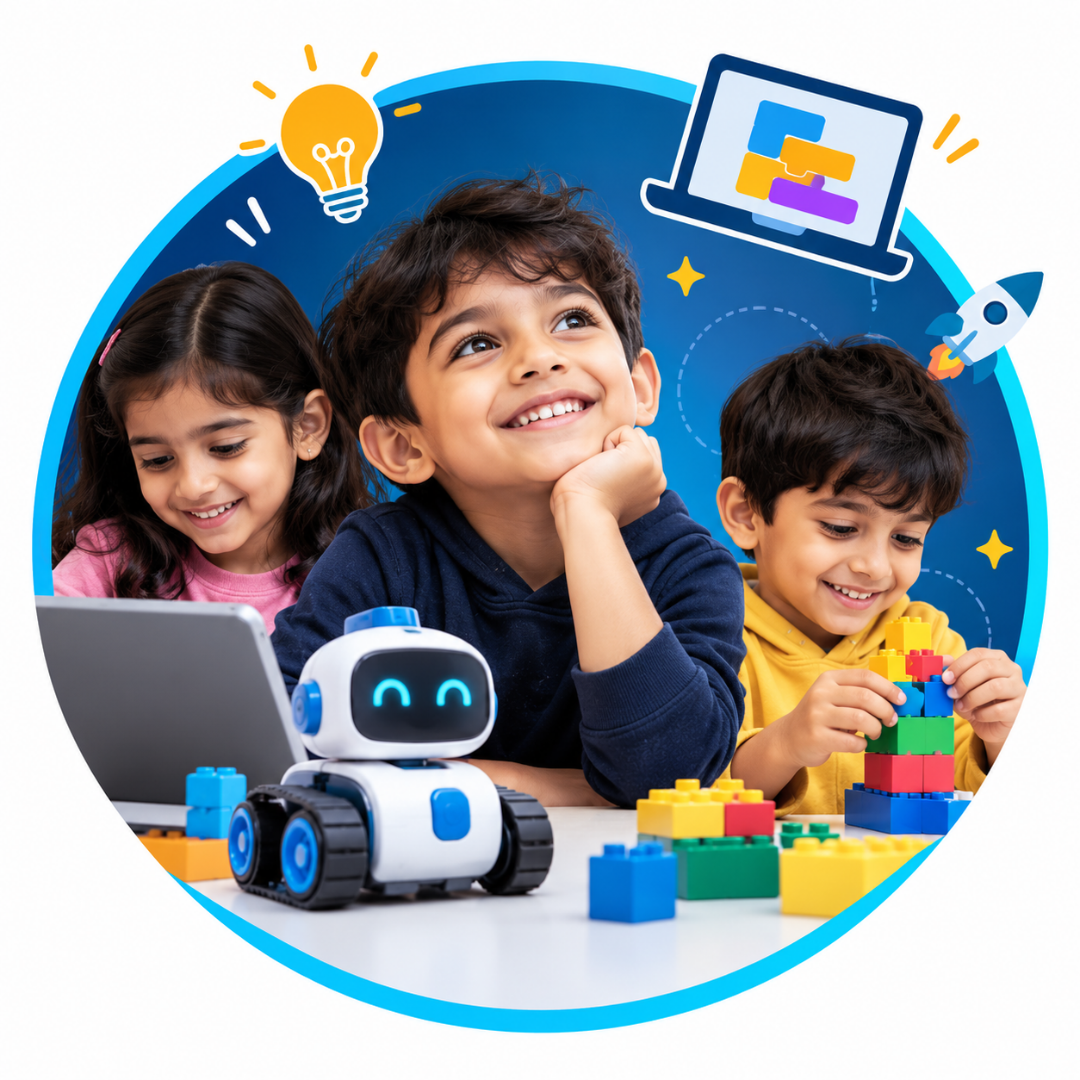
Discover & Imagine
Spark curiosity through playful, hands-on exploration.
Learning focus
Build awareness through playful observation, experimentation, storytelling and hands-on activities.
Key curriculum areas
- Basic STEM concepts
- Shapes, patterns and colours
- Simple machines and basic robot movement
- Creativity and fun science exploration
Tools & technologies
Manipulatives, DIY kits, basic sensors and simple robotic toys.
Example projects students can make
- Shape, colour and pattern sorting board
- Paper or building-block bridge
- Simple wheeled robot or moving model
- Everyday-materials simple machine
- Creative structure-building challenge
Learning outcomes
Curiosity, observation, creativity and confidence building.
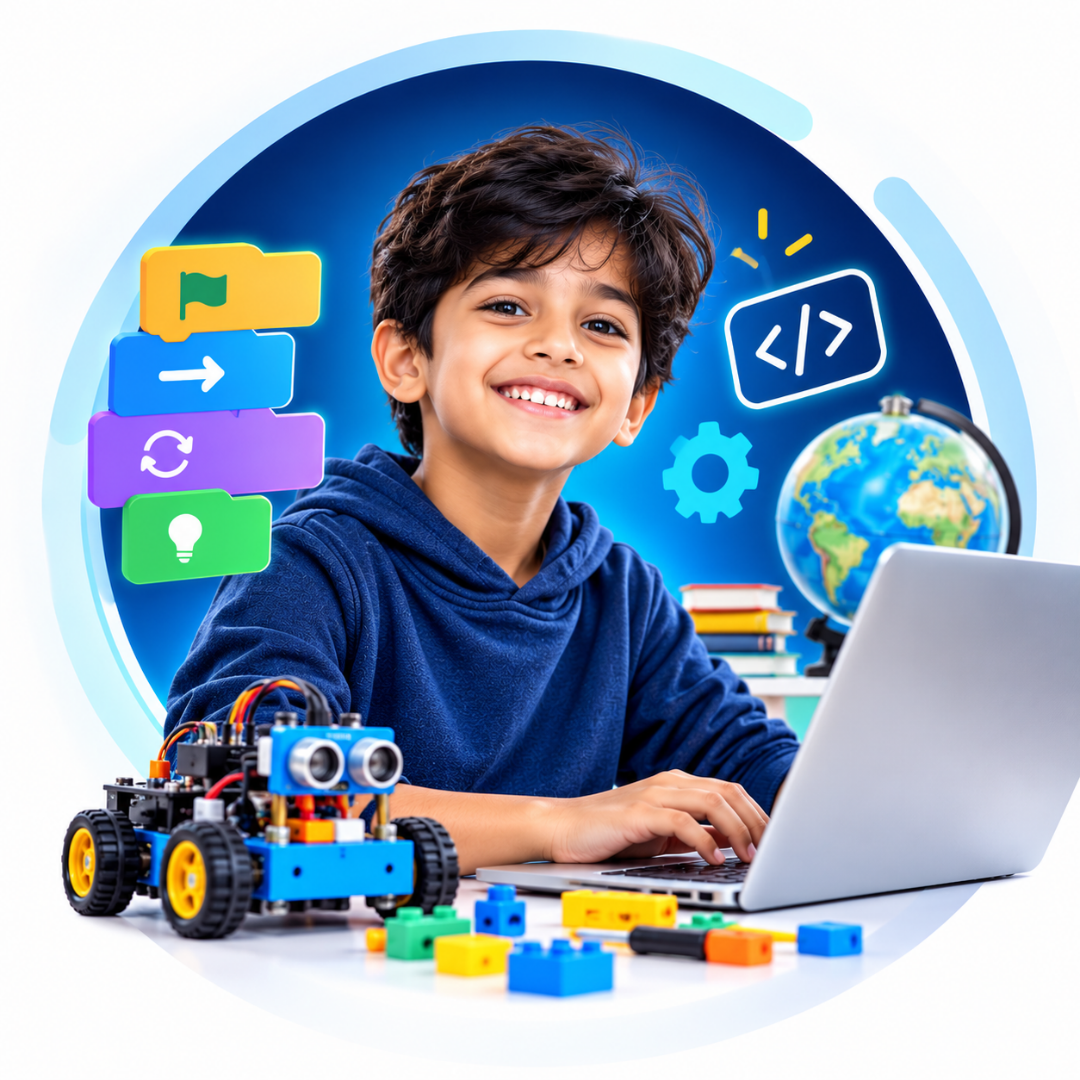
Explore & Experiment
Build strong STEM foundations through engaging activities.
Learning focus
Understand core STEM concepts by exploring how instructions, circuits and sensors work together.
Key curriculum areas
- Basic robotics concepts and sensors
- Block coding with Scratch
- Electronics and simple circuits
- Measurement, time and science experiments
Tools & technologies
LEGO kits, sensors, Micro:bit, basic circuits and block-coding tools.
Example projects students can make
- Scratch animated story or interactive quiz
- LED traffic-light model
- Basic sensor-based alert system
- LEGO or DIY moving vehicle
- Measurement or reaction-time game
Learning outcomes
Concept understanding, logical thinking, teamwork and presentation skills.
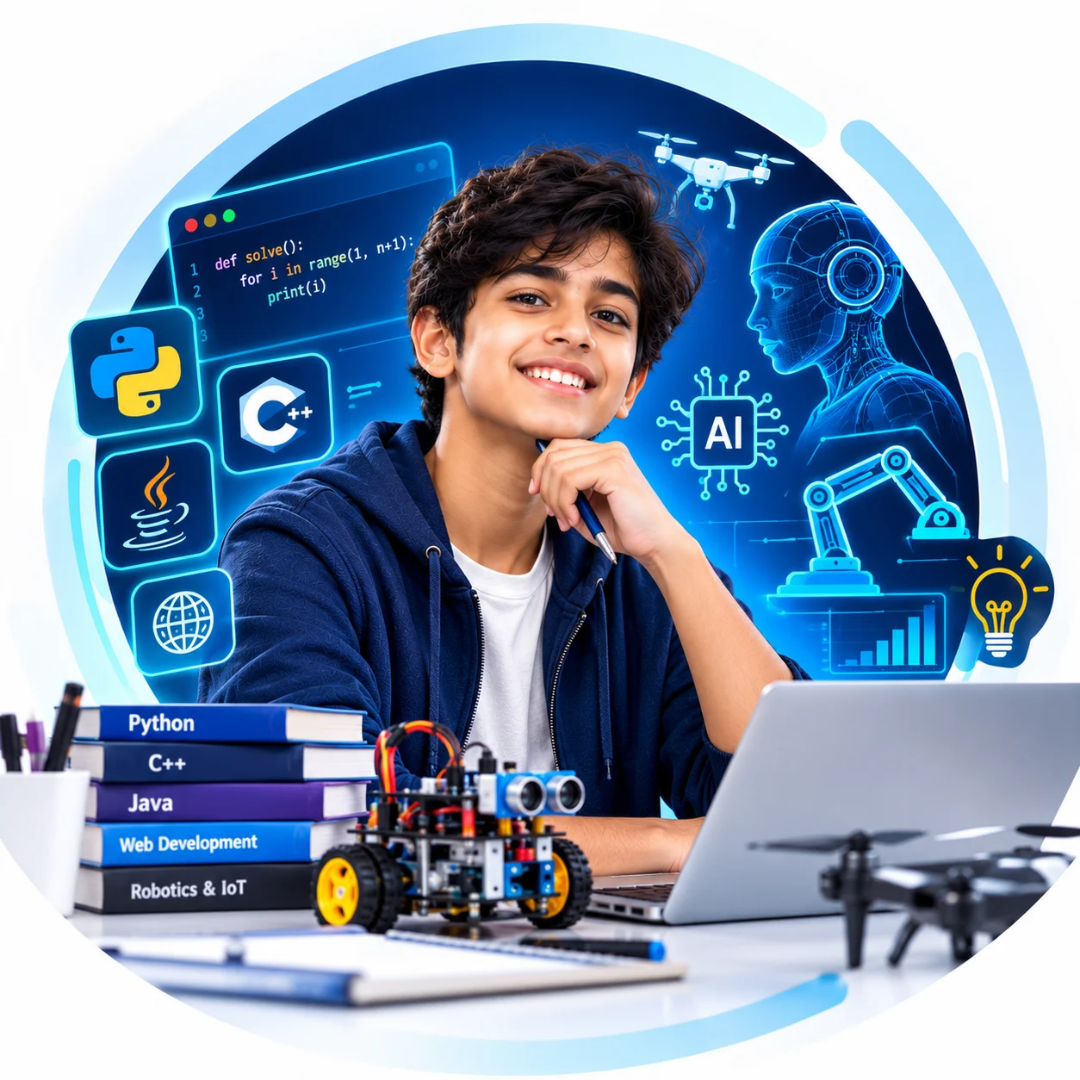
Build & Prototype
Apply knowledge to design, build and solve practical problems.
Learning focus
Connect coding with physical components, use sensors and actuators, and improve designs through testing.
Key curriculum areas
- Robotics and microcontrollers
- Sensors, actuators and IoT basics
- Coding, mathematics and logic in robotics
- Design and introductory 3D printing
Tools & technologies
Arduino, sensors, IoT kits, robotics kits, introductory 3D printing and coding platforms.
Example projects students can make
- Automatic night-light using a light sensor
- Ultrasonic distance-measuring device
- Smart plant-watering prototype
- Servo-operated mini barrier gate
- 3D-designed keychain or product model
Learning outcomes
Technical skills, problem solving, innovation and project development.
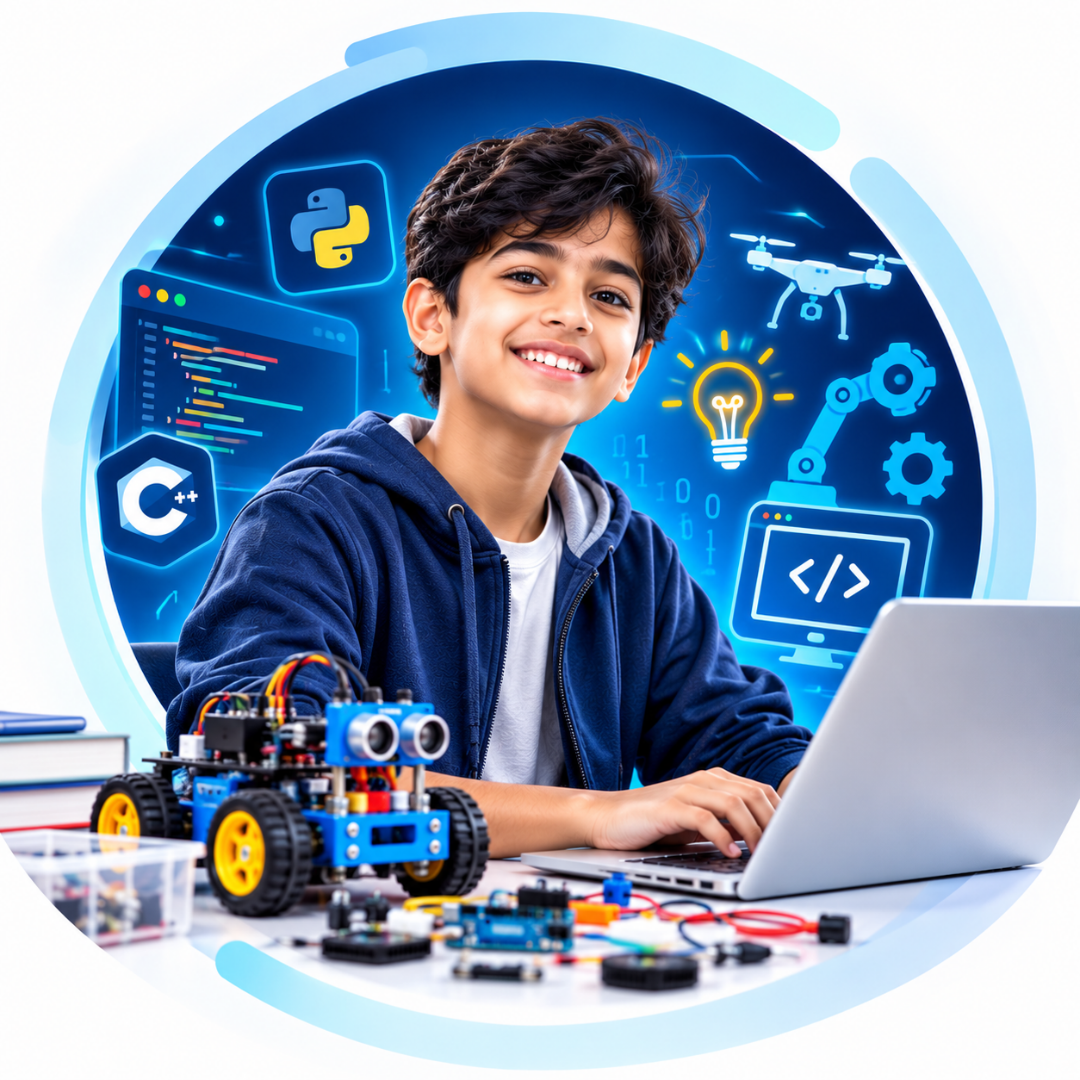
Innovate & Engineer
Deepen technical knowledge through interdisciplinary projects.
Learning focus
Use programming, design thinking and prototyping to investigate problems and develop solutions as a team.
Key curriculum areas
- Python and advanced coding
- AI basics and introduction to machine learning
- Robotics, automation and mechanics
- Data handling, analysis and IoT applications
Tools & technologies
Python, advanced robotics kits, 3D printers and simulation tools.
Example projects students can make
- Python-based quiz or data-visualisation tool
- Obstacle-detection robot prototype
- Automated plant-monitoring system
- Sensor-based smart-room model
- 3D-designed component for a working prototype
Learning outcomes
Critical thinking, advanced technical skills, leadership and portfolio development.

Excel & Apply
Solve complex problems through research and real-world applications.
Learning focus
Investigate practical problems, analyse data, evaluate design choices and test technology prototypes against clear objectives.
Key curriculum areas
- AI and machine-learning concepts
- Advanced robotics and IoT systems
- Data science and visualisation
- Drones, automation and engineering design
Tools & technologies
AI platforms, IoT systems, drones, CAD tools and data-analysis tools.
Example projects students can make
- IoT environmental-monitoring dashboard
- Sensor-based smart-parking model
- Machine-learning image or data classifier
- Robotics prototype for a defined task
- CAD-designed engineering solution with a test report
Learning outcomes
Innovation mindset, industry readiness and real-world solutions.
Lead & Innovate
Develop independent research, innovation and entrepreneurial thinking.
Learning focus
Define a problem, investigate approaches, develop a prototype, evaluate results and communicate findings in a structured project.
Key curriculum areas
- Advanced AI and robotics applications
- Autonomous systems and emerging technologies
- Research and innovation
- Entrepreneurship, startups and capstone projects
Tools & technologies
AI frameworks, advanced robotics, drones, IoT platforms and prototyping tools.
Example projects students can make
- AI-assisted analysis of a defined dataset
- Autonomous-navigation simulation or robot prototype
- IoT energy or environment-monitoring system
- Aerospace or flight-science demonstration model
- Capstone prototype with research report and presentation
Learning outcomes
Research orientation, entrepreneurial thinking and career readiness.
Train, Implement & Improve
Help educators deliver structured, practical STEM learning.
Programme components
- Understand grade-wise learning objectives
- Prepare lesson plans and learning materials
- Demonstrate activities and guide practical work
- Assess projects, teamwork and presentations
- Use feedback to improve classroom delivery
Resources
Teacher manuals, lesson plans, student workbooks, project repository and assessment framework.
Practical outputs
Classroom demonstrations, activity sheets, project rubrics and student portfolios.
Explore Emerging Technologies
Focused modules selected for learner level and available equipment.
Possible module areas
- AI, machine learning and data analytics
- Robotics, drones and automation
- 3D design and printing
- Aerospace, IoT and emerging technology
Example projects students can make
- 3D-designed object or functional prototype
- Flight and rocket-science demonstration model
- Sensor-connected IoT demonstration
- AI-based data exploration activity
- Robotics challenge or automation prototype
Delivery approach
Focused demonstrations, guided practical activities and applied projects. Complexity should match learner level, safety requirements and equipment available.
A Holistic Curriculum for the Future
Explore the technologies and essential skills that prepare learners to think critically, create confidently, and innovate.
Coding &
Computing
Build logical thinking through programming, algorithms, and computational problem-solving.
- Patterns, logic and algorithms
- Scratch and visual programming
- Python and application development
- Computational problem-solving
Robotics &
Automation
Design, build and program robots that interact with the world around them.
- Robot structures and mechanisms
- Motors, movement and control
- Sensor-based systems
- Automation and autonomous robots
Electronics
& IoT
Understand circuits, sensors, microcontrollers and connected smart devices.
- Basic and digital electronics
- Sensors and actuators
- Microcontrollers and Arduino
- Internet of Things applications
AI & Machine
Learning
Discover intelligent systems, data-driven decisions and responsible AI.
- Artificial intelligence fundamentals
- Data patterns and classification
- Introductory machine learning
- Responsible and ethical AI use
Drone
Technology
Explore flight principles, drone systems, navigation and practical applications.
- Principles of flight and lift
- Drone components and controls
- Navigation and flight safety
- Mapping and real-world applications
3D Printing
& Design
Turn digital concepts into prototypes using 3D modelling and design thinking.
- 3D shapes and spatial reasoning
- Digital modelling and CAD basics
- Rapid prototyping
- Design, test and improve cycles
AR/VR &
Emerging Tech
Experience immersive learning and explore technologies shaping tomorrow.
- Augmented and virtual reality
- Immersive simulations
- Interactive digital experiences
- Emerging technology applications
Life Skills
& Innovation
Strengthen creativity, collaboration, communication and real-world problem-solving.
- Creative and critical thinking
- Design thinking and ideation
- Teamwork and communication
- Project planning and presentation
Learning That Builds.
Impact That Matters.
From classroom curiosity to real-world creations, students develop practical skills through STEM, robotics, coding and innovation.
Schools Partnered
Expanding access to hands-on STEM learning.
Students Trained
Learning by making, testing and discovering.
Projects Built
Turning ideas into working prototypes.
Teachers Enabled
Supporting educators in practical learning.
Ideas Into Innovation.
Explore what practical learning can create.
More Than Projects.
Skills for Life.
Critical Thinking
Analyse challenges and develop solutions.
Creative Confidence
Experiment, iterate and improve ideas.
Technical Skills
Apply coding, electronics and robotics.
Collaboration
Share ideas and build together.
Resources for the Next Generation of Innovators.
Explore STEM curriculum frameworks, project ideas and learning kits created to support meaningful, hands-on learning in schools.
Explore the library.
Choose a resource to preview its details and access the PDF.
DOCUMENTS
Curriculum Framework (Nexora)
Explore the Nexora curriculum framework for structured STEM learning and curriculum planning in schools.
Framework
RESOURCE
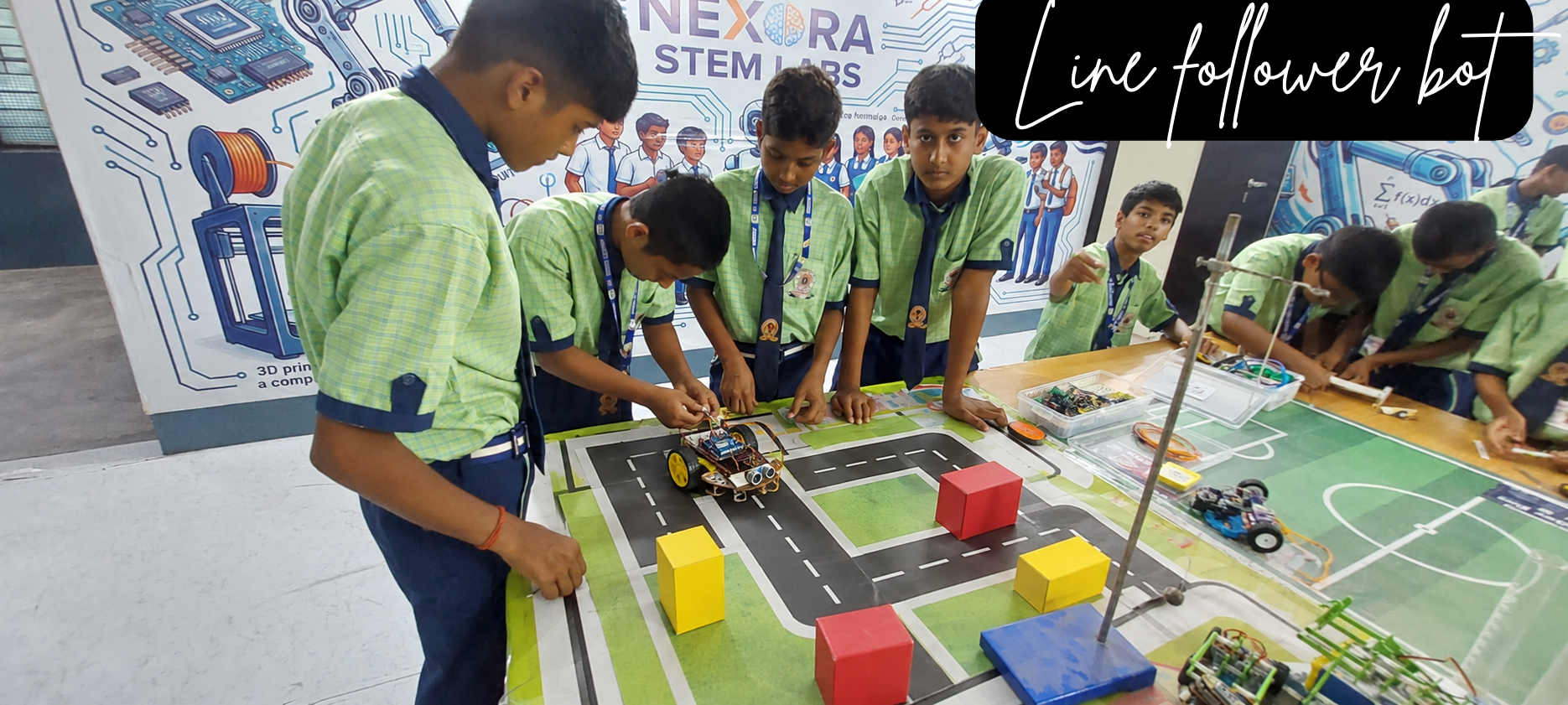 HANDS-ON LEARNING
02
Project Bank
Discover practical STEM project ideas for classroom exploration, experimentation and making.
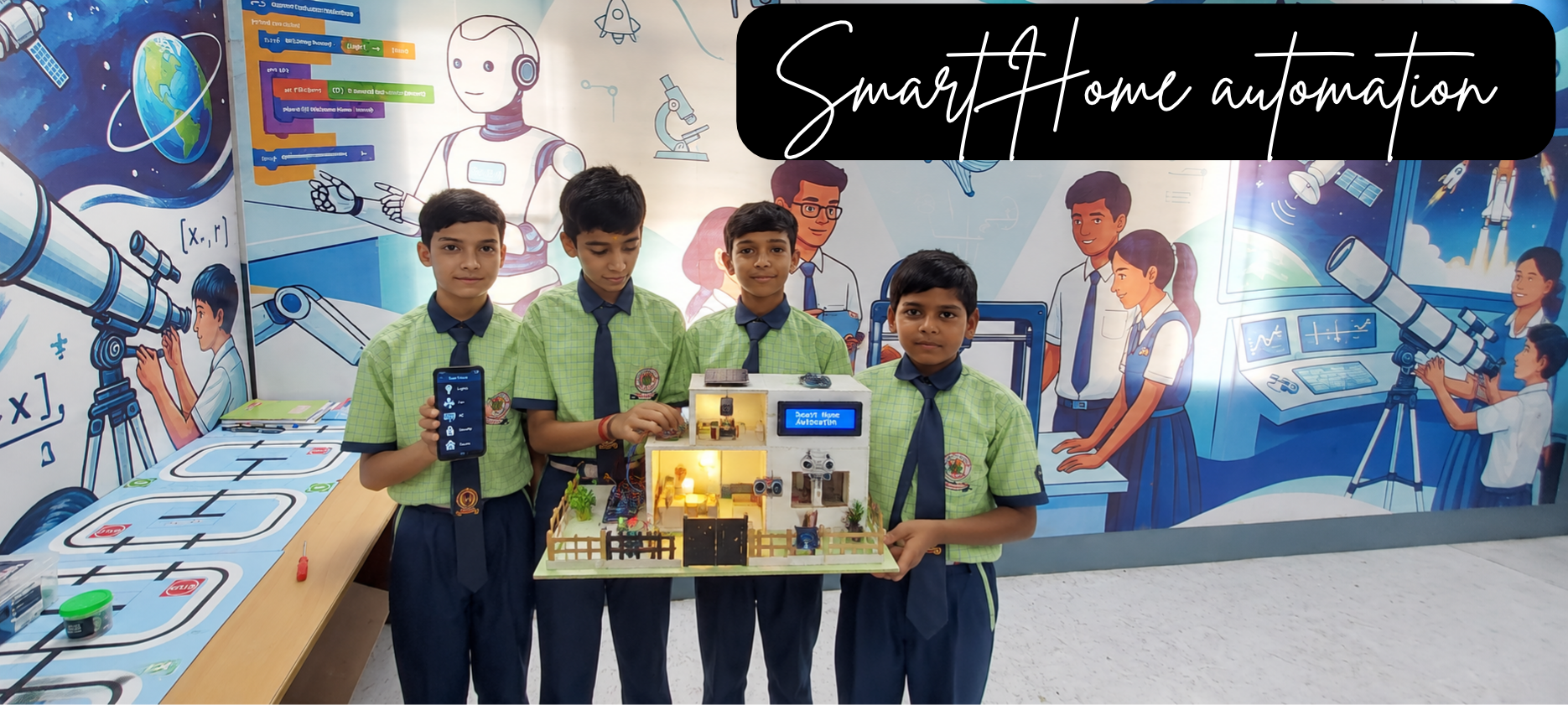 TOOLS FOR MAKING
03
Our Kits
Explore STEM learning kits and components for practical classroom activities and projects.
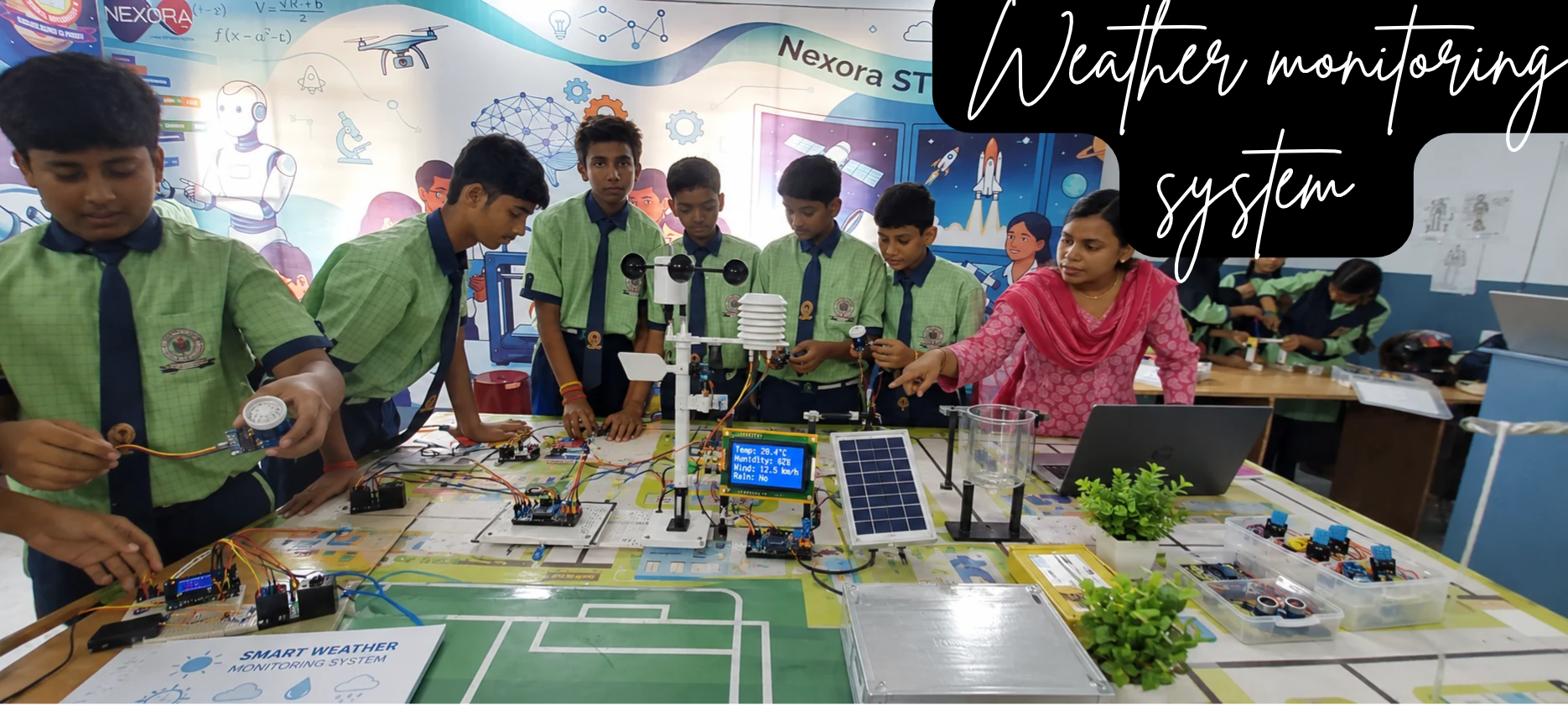 CURRICULUM REFERENCE
04
Curriculum Framework
Access the earlier Nexora curriculum framework for reference and curriculum planning.
No matching resources
Try another keyword or select a different category.
More than documents.
Tools for progress.
Structured Learning
Curriculum resources for thoughtful planning.
Practical Exploration
Project ideas that encourage learning by doing.
Classroom Application
Resources to support hands-on implementation.
Learning that moves
ideas into impact.
We combine structured learning, hands-on projects and real-world problem-solving to help learners build practical skills, confidence and the mindset to shape what comes next.
Explore our learning journeyCuriosity-led
Ask better questions.
Design thinking
Turn challenges into ideas.
Hands-on learning
Build, test and improve.
Real-world impact
Create for tomorrow.
From first question to real solution.
Every stage builds on the last, turning knowledge into capability.
Discover
Explore real-world challenges, observe patterns and spark curiosity through meaningful questions.
Design
Develop ideas, think critically and plan creative solutions using design thinking.
Build
Bring concepts to life through prototypes, practical projects, testing and iteration.
Grow
Reflect, collaborate and apply new capabilities to real situations with confidence.
Not just learning how things work. Learning how to make them work better.
THE SOSD LEARNING PHILOSOPHY